

A good opportunity can be surprisingly hard to turn down. Especially when you can put a dollar figure beside it.
It gets harder when you’re responsible for other people’s livelihoods. You want to protect the business, keep people busy, build momentum. There are plenty of sensible reasons to say yes.
But what are you agreeing to build more of?
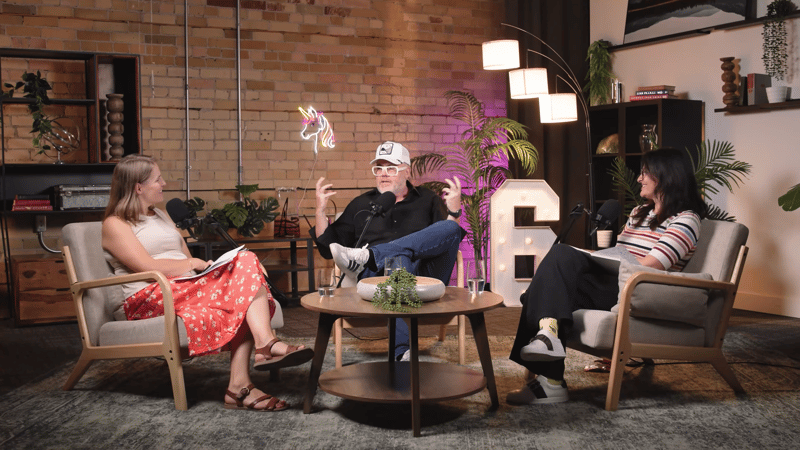
I recently joined Nikki Stone and Clare Ravenstreet on The Sixth Suite. Our conversation kept coming back to the choices that shape a business and the lives of the people in it. Who you work with. What you tolerate. Where you put your energy. And what happens when your values start influencing those decisions, especially the uncomfortable ones.
These are five moments from that conversation that have stayed with me.
1. Money gets a vote. Just one.
Nikki, who serves on Titan One’s advisory board, recalled a conversation with my co-founder Mark and me. One of us had said, “Well, that would be great if our only motivator was money.” She couldn’t remember which of us said it. It could have been either.
Mark and I want a healthy, growing business. We also want to enjoy the work, be proud of it, and spend our time with people who care about doing it well. Those things have to influence which opportunities we pursue.
Otherwise, the next piece of revenue gets to make an awful lot of decisions for you. Who you hire. What you become good at. What fills your days. Before long, you can be running a bigger version of something you never consciously chose.
We started getting clearer about the people we wanted in our business, the relationships we wanted around us, and the work we wanted to do together. That gave us a more useful basis for deciding what made an opportunity a yes.
Watch: What if money isn’t the only motivator? · 40:08
2. Saying yes has a cost, too.
We talked about parting ways with a client who represented good revenue. The relationship was taking us in a direction we no longer wanted to go.
That was a difficult decision. Revenue pays salaries. Walking away creates a gap you have to deal with. But the strain of keeping the relationship was spreading through the team. People were dreading their inboxes. Continuing had consequences we could already see.
The cost of saying no was easy to put a number on. The cost of saying yes was showing up in how people felt about coming to work.
After we made that decision and became clearer about what mattered to us, growth accelerated. My sense is that we became better at attracting people and opportunities that fit. But, as I said in the conversation, “And that was not why we did it.”
We didn’t know the outcome in advance. We knew enough about the situation we were in to decide it needed to change.
Watch: Walking away from good revenue · 42:28
3. Your team lives with your exceptions.
One of the strongest observations in the conversation was that culture is what people experience. The meeting they’re anxious about. The idea they hesitate to share. The email they don’t want to open.
Most leadership teams can describe the culture they want. The harder question is what happens when protecting it means making a commercially inconvenient decision.
If we say we value our people, then repeatedly ask them to absorb behaviour that contradicts that, they notice. They also learn what takes priority when there’s a conflict.
This matters to brand, too. We can help an organization articulate its values beautifully. But the people working there need to recognize themselves in the description. Otherwise, we’ve given them another reason to be cynical.
The exceptions deserve as much scrutiny as the statements. They’re where people find out what we mean.
Watch: The culture people actually experience · 44:47
4. Why does someone have to win the meeting?
Later, I described the kind of working environment where every project conversation becomes an “intellectual knife fight to express dominance.” I suspect a few people listening will have recognized what it feels like to be in that room.
Good work needs challenge. People need to be able to disagree, ask difficult questions, and point out when something isn’t good enough. That takes trust, particularly when the person whose idea you’re challenging has more authority than you.
I said, “I don’t have to be right.” It’s a useful thing to remind yourself of when you care deeply about the work and have strong opinions about it.
I want to work with people who can change my mind. I want to work with people who are open to being challenged. I want us to arrive at something better because we’ve thought about it together. There’s real energy in that kind of relationship, and it’s part of what makes the work worth doing.
Watch: Doing great work without the knife fight · 56:31
5. What are you saving it for?
We also talked about music. It has always been a big part of my life, but between building a business and raising twins, I hadn’t been making much room for it.
I tried renting a studio in our office building. I used it, but less than I’d hoped. Eventually I moved the instruments and equipment home, within reach of where I work. Some of my best ideas now arrive while I’m waiting for my daughters to get ready for bed. Naturally, inspiration has chosen the one part of the day when we’re trying to wind things down.
At the end of the episode, I was asked for one piece of life advice. Mine was to make room now for the thing you keep telling yourself you’ll get to someday.
It’s advice I’m trying to take myself. There will always be another responsibility, another deadline, another good reason to wait. At some point, the things we say matter have to get a place in the day.
Watch: Making room for music · 38:05
Watch: The thing you keep putting off · 59:48
That’s the question I’ve come back to since the conversation: what makes it a yes?
There’s the opportunity itself. There’s also the work it creates, the people you’ll spend your time with, and the kind of business and life that could grow from and around it. I want us to keep getting better at considering all of that before we commit.
Watch the full conversation with Nikki Stone and Clare Ravenstreet on The Sixth Suite.
